
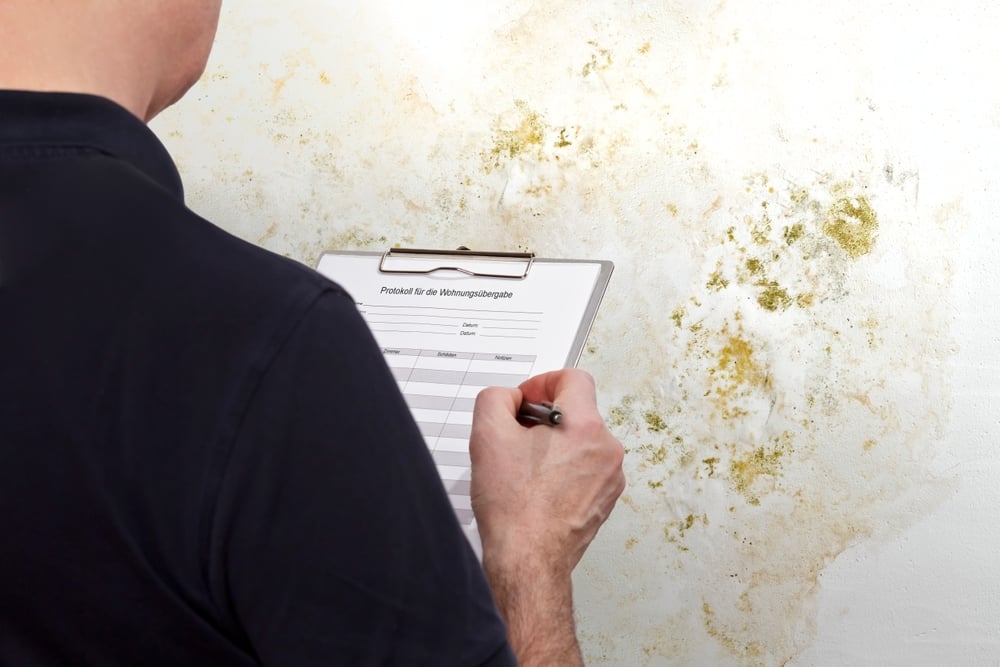
Half of temporary accommodation homes are showing signs of damp and mould, a review conducted by property manager Switch Management has found.
Since the Hazards in Social Housing (Prescribed Requirements) (England) Regulations 2025, commonly referred to as ‘Awaab’s Law’, came into effect for the social rented sector on 27 October 2025, Switch has been auditing temporary accommodation stock.
John Angus, managing director of Switch Management, said: “Awaab’s Law sets clear, legally binding expectations around how damp and mould must be identified, recorded and resolved.
“The challenge for many councils is having the capacity and systems in place to deliver and evidence compliance across large and often complex portfolios.
“Our review highlights that it will be extremely difficult for existing council teams to complete the surveys and visits.
“An efficient solution is to work with property experts like Switch, who can complete comprehensive audits that enable the council team to quickly act on the significant opportunities that the data provides.”
Over the past six months, Switch conducted 1,800 calls to tenants in temporary accommodation, 1,150 of which were successful.
Some 650 tenants were identified for individual property visits, and 572 homes (88%) were then successfully inspected.
Some 205 tenants in temporary accommodation were not contactable after five calls and two visits, raising the question of whether the homes were being used.
John Angus, managing director of Switch Management, said: “Awaab’s Law sets clear, legally binding expectations around how damp and mould must be identified, recorded and resolved.
“The challenge for many councils is having the capacity and systems in place to deliver and evidence compliance across large and often complex portfolios.”